
On Timing and Delivery
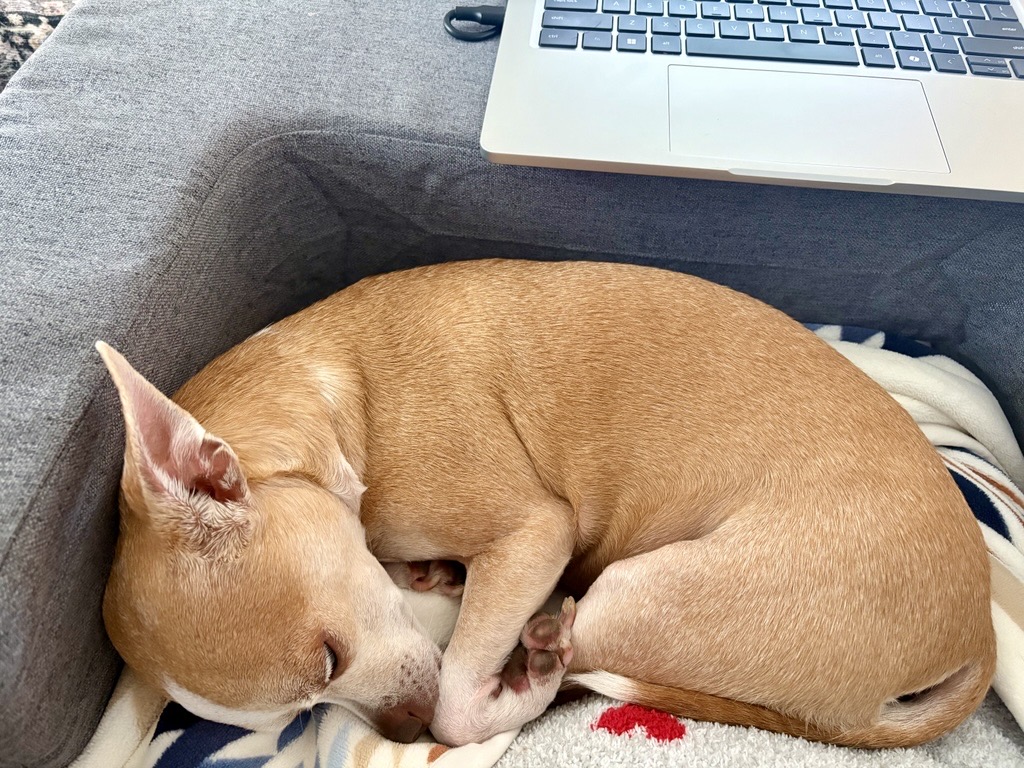
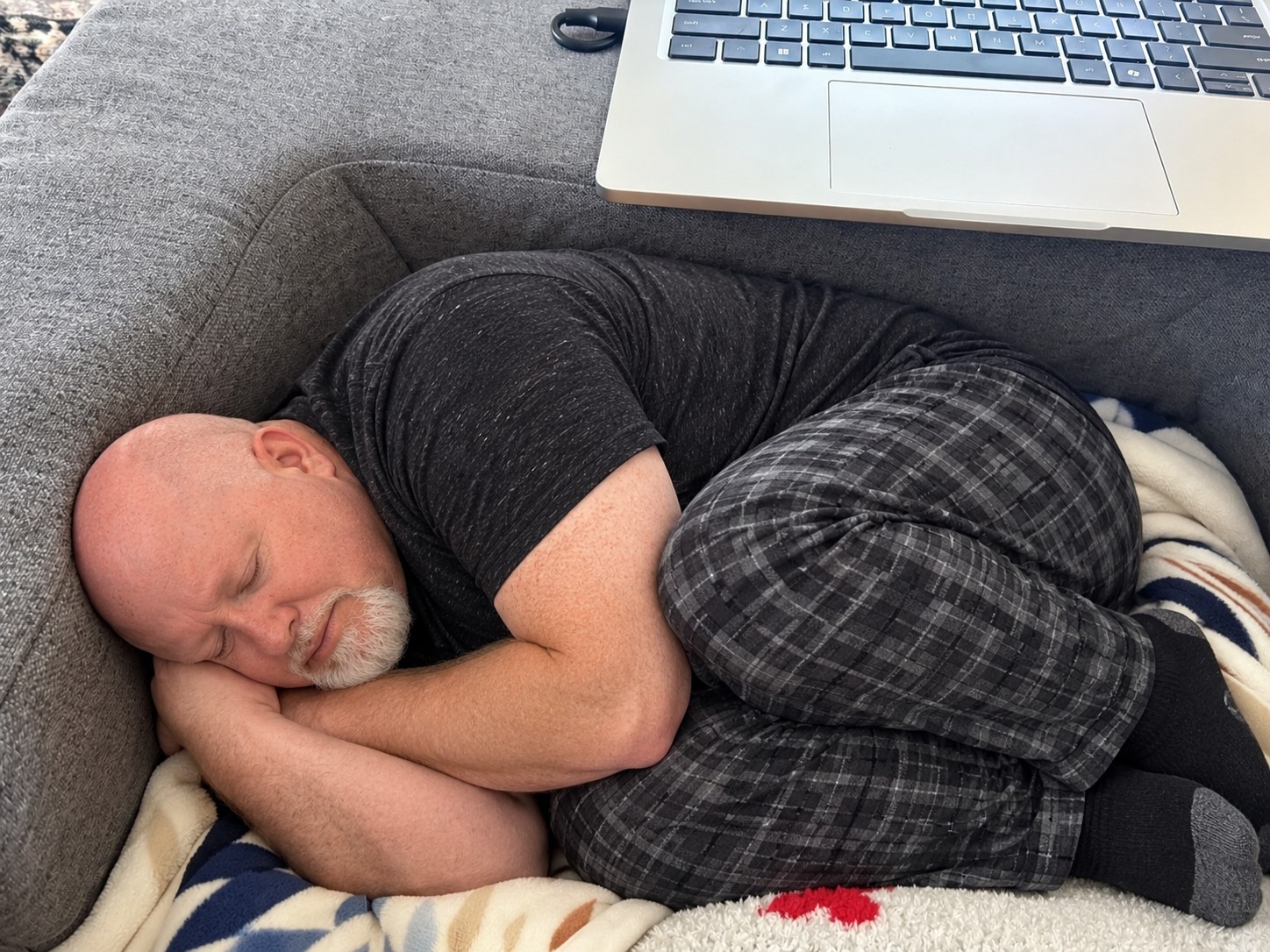
Only one of the pictures in this post is real. That's Piglet. The rest are AI, which probably comes as a relief once you get further down the page.
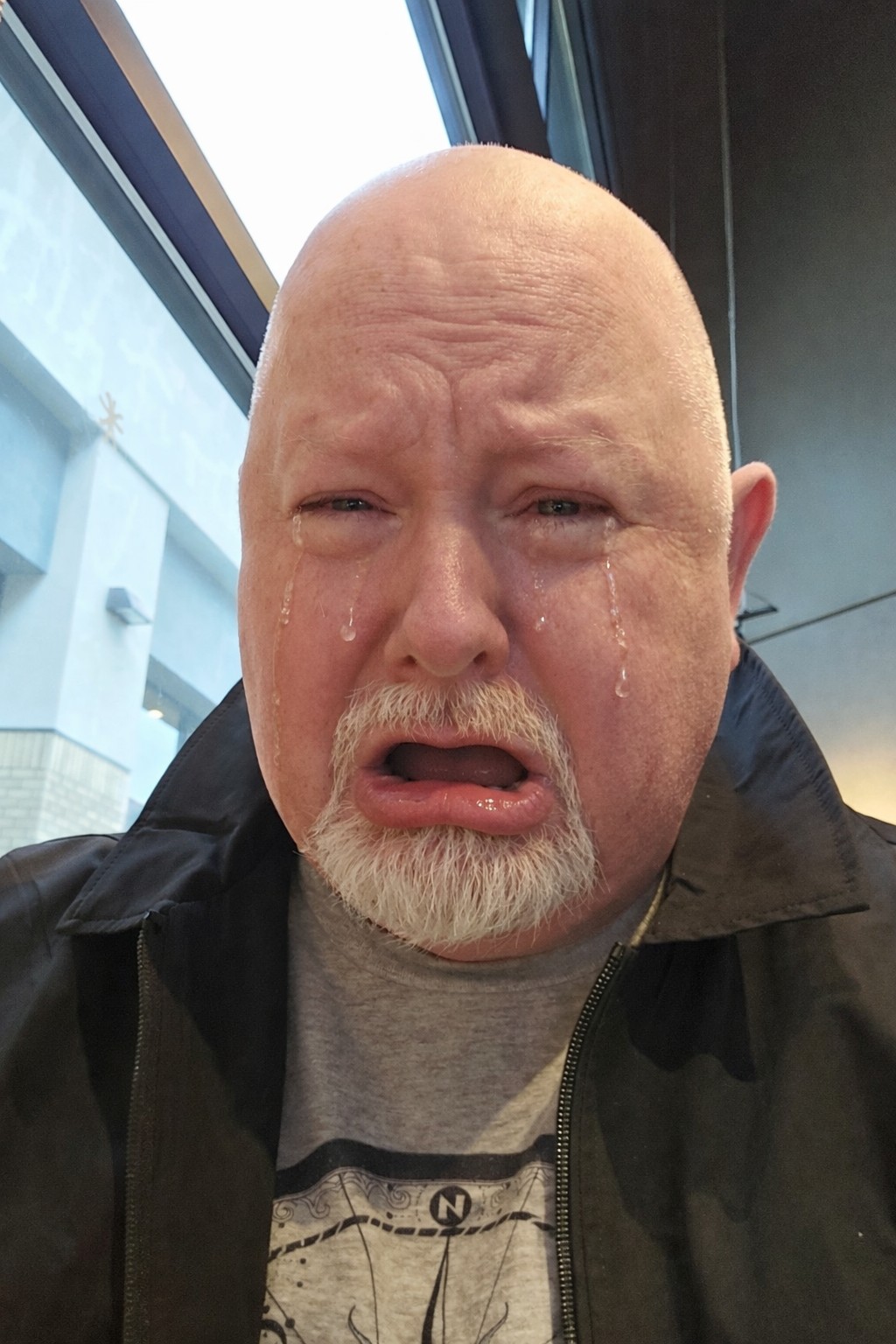
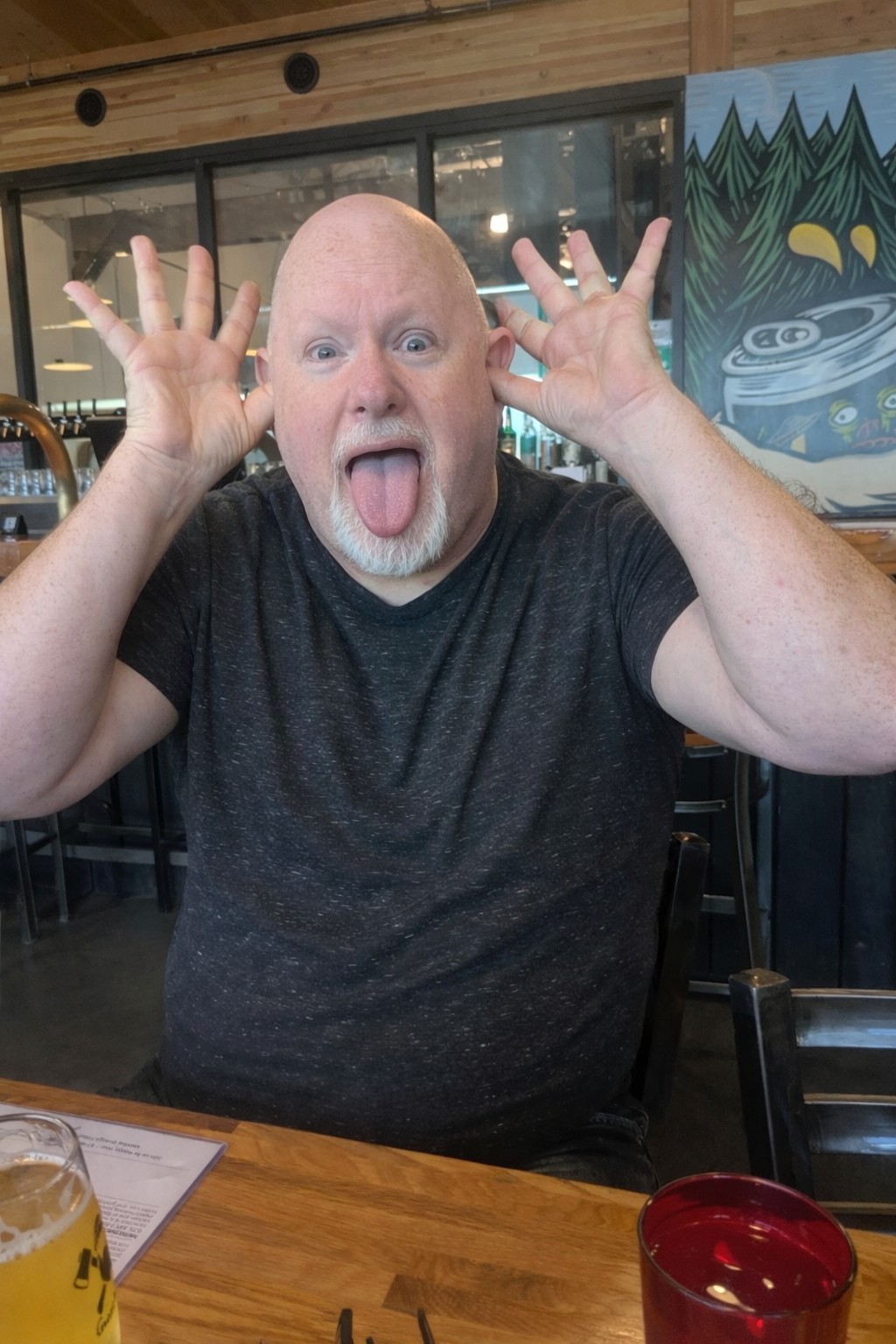
A coworker posted Piglet's photo in our paralegal group's chat with a comment about her needing her beauty sleep. I replied, "Me too," with the matching picture of myself. She told me it was probably the best AI image I've made yet. Two words and a picture. I was pleased with myself, partly because there was a time when I couldn't have made that joke land.
Growing up, I loved Mork from Mork & Mindy, loved sitcoms and very literal humor, and wanted to be funny. Wanting didn't help much. On the rare occasions I got a joke out, nobody laughed. By college, the best I could usually manage was a delayed "Aha," after someone had worked out what I'd meant.
Then I met a guy who was funny, reliably funny, and who had worked at it. He repeated punchlines he liked until he learned how to deliver them. I had thought being funny was something you either were or weren't. He had treated it as something you could practice.
One day we were at a study table when a couple of girls he knew sat down with us. Something in the conversation gave me an idea for a joke. I said it out loud, clearly. Nothing. My friend considered it for a moment, looked at me, and repeated my remark back to me as a question. Both girls burst out laughing.
I don't remember the line. I remember that he had used my words. The joke had been there; I hadn't known how to give it to anyone else.
About five years later, I was in an edit bay working on a commercial built around comedic timing. The copywriter and art director told me my timing was impeccable. I was a real comedy editor, they said. I didn't quite believe them. I had enough imposter syndrome about my editing in those days to discount most compliments.
Looking back, I can see what they meant. A cut lets you place a pause exactly. You can move it a frame at a time, watch it again, and feel the point where the scene starts working. I could do that on a timeline long before I could reliably do it with my voice.
Mark Twain wrote in How to Tell a Story, "The pause is an exceedingly important feature in any kind of story," then warned how easily its length can ruin the effect. An editor gets to keep adjusting. At a study table, you mostly get to sit there with what you just said.
Fatherhood gave me a much longer apprenticeship. Once my kids were old enough to understand humor, dad jokes turned out to be my forte. An eye roll, a sigh, even a flat "hahaha" still counts as a win. But fifteen years ago my delivery was still flat, and I kept working on it.
What helped was pushing my voice past what felt natural. A little more inflection, a little more exaggeration. What felt over the top to me was often just enough for the other person to hear that I was joking. These days I routinely get a big laugh from a small comment. After all those years of "Aha," that feels good.
Steve Martin put it plainly in his memoir excerpt "Being Funny": "I tried to make voice and posture as crucial as jokes and gags." I had spent years concentrating on what to say. Meanwhile, the rest of me was giving a fairly unconvincing performance.
Self-deprecating humor works especially well for me. I work closely with four women, and when they talk about getting their makeup done, I'll offer, "Yeah, I struggle with that too." It catches them off guard, and I'm clearly volunteering to be the ridiculous one.
That part matters. Years ago, an MTV client told me fat was funny while we were working on a promo with an overweight man. I was overweight too, and I didn't find either the promo or the observation particularly amusing. I remember how it felt. Choosing to make myself the joke gives me a say in something I didn't have a say in then.
The AI pictures grew out of the same impulse. I make them for our paralegal group to lighten the mood. Sometimes a coworker and I will be in a meeting, I'll send her something, and we end up trying to hide our grins while everyone else carries on. The exaggeration does some of the work my voice had to learn. I'll let these speak for themselves.
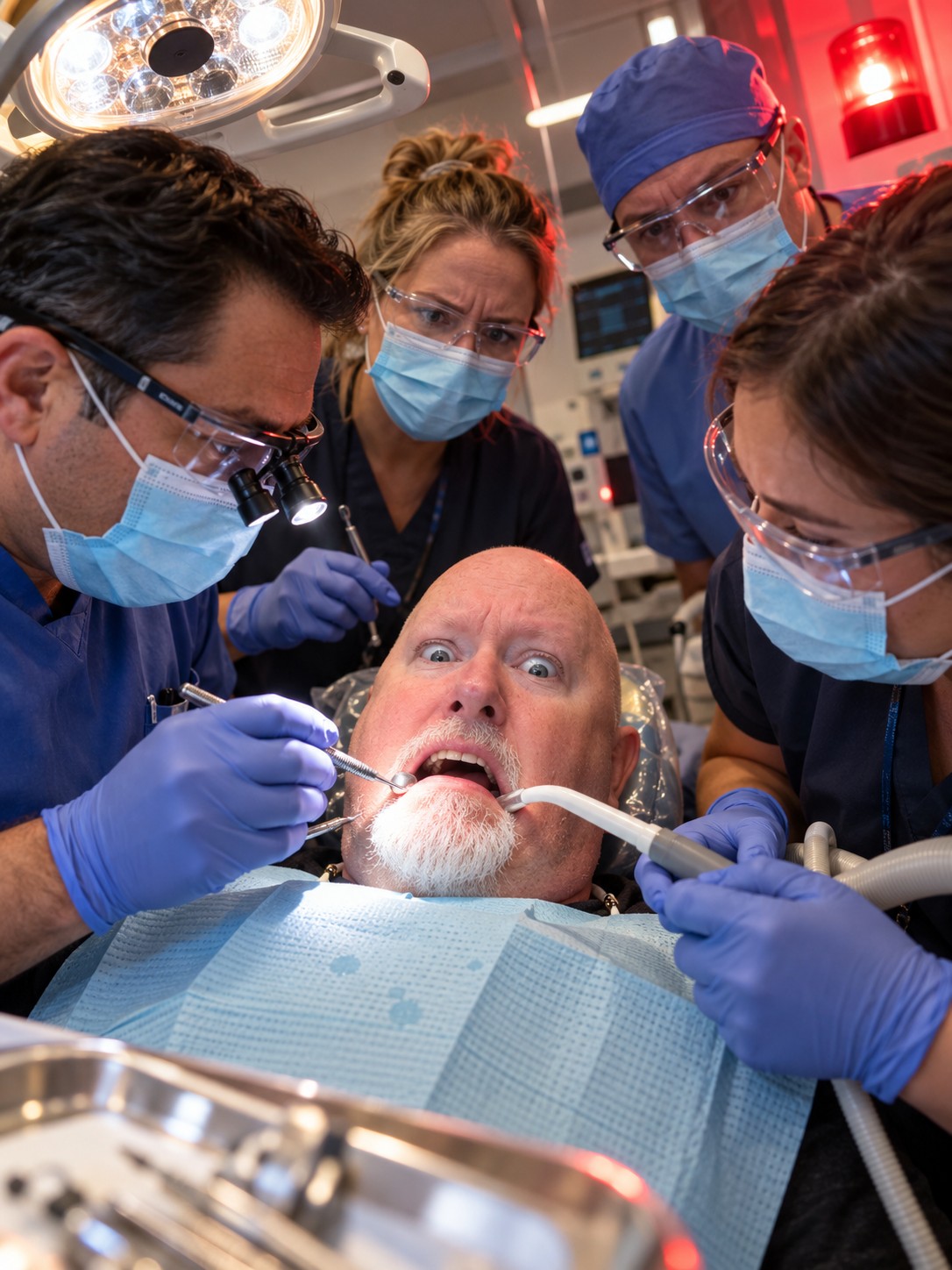
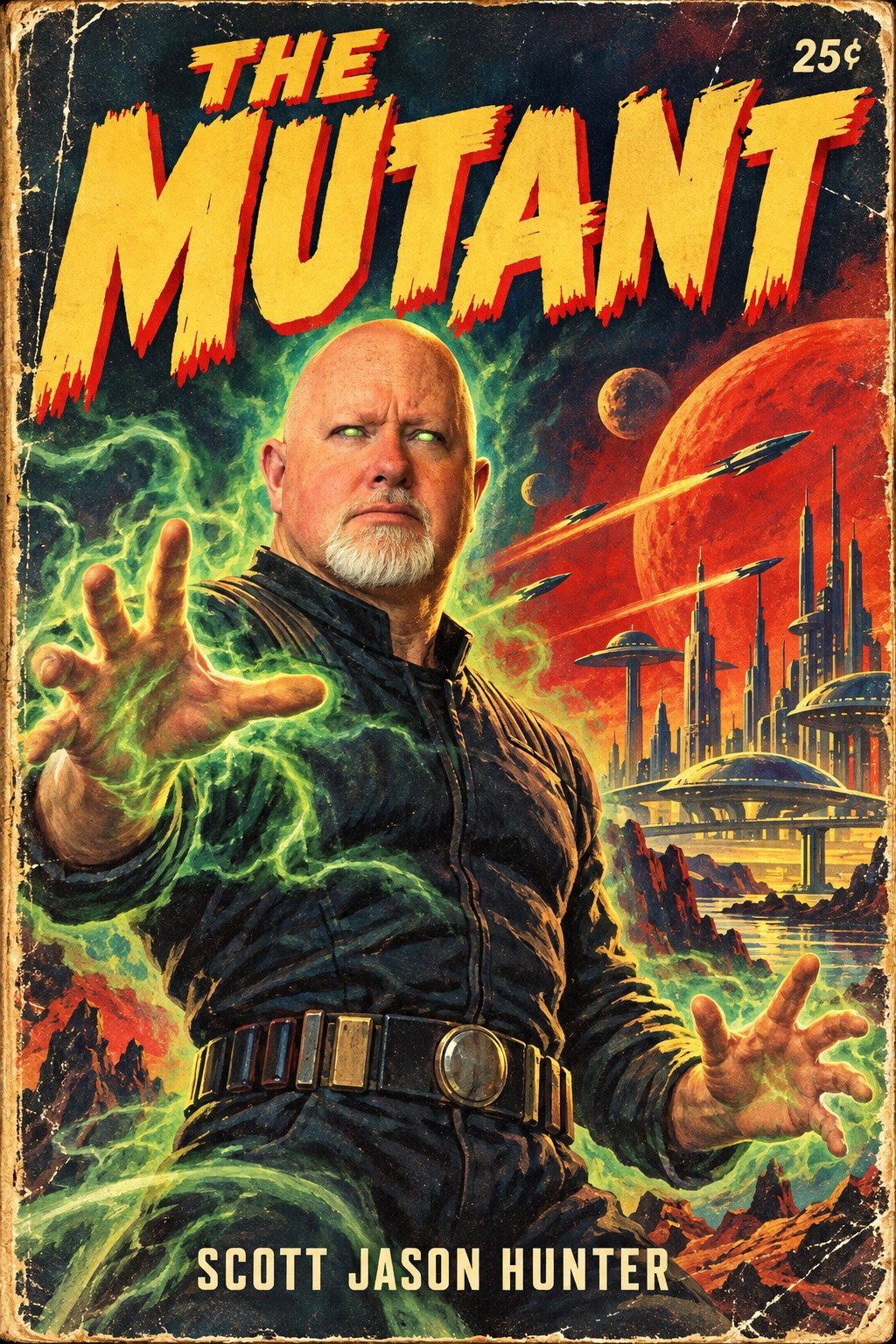

My favorite is the dinner sequence below. A friend was out with friends and family, and I sent him these increasingly questionable contributions to the evening. He shared them around the table and reported back that they found them hilarious.
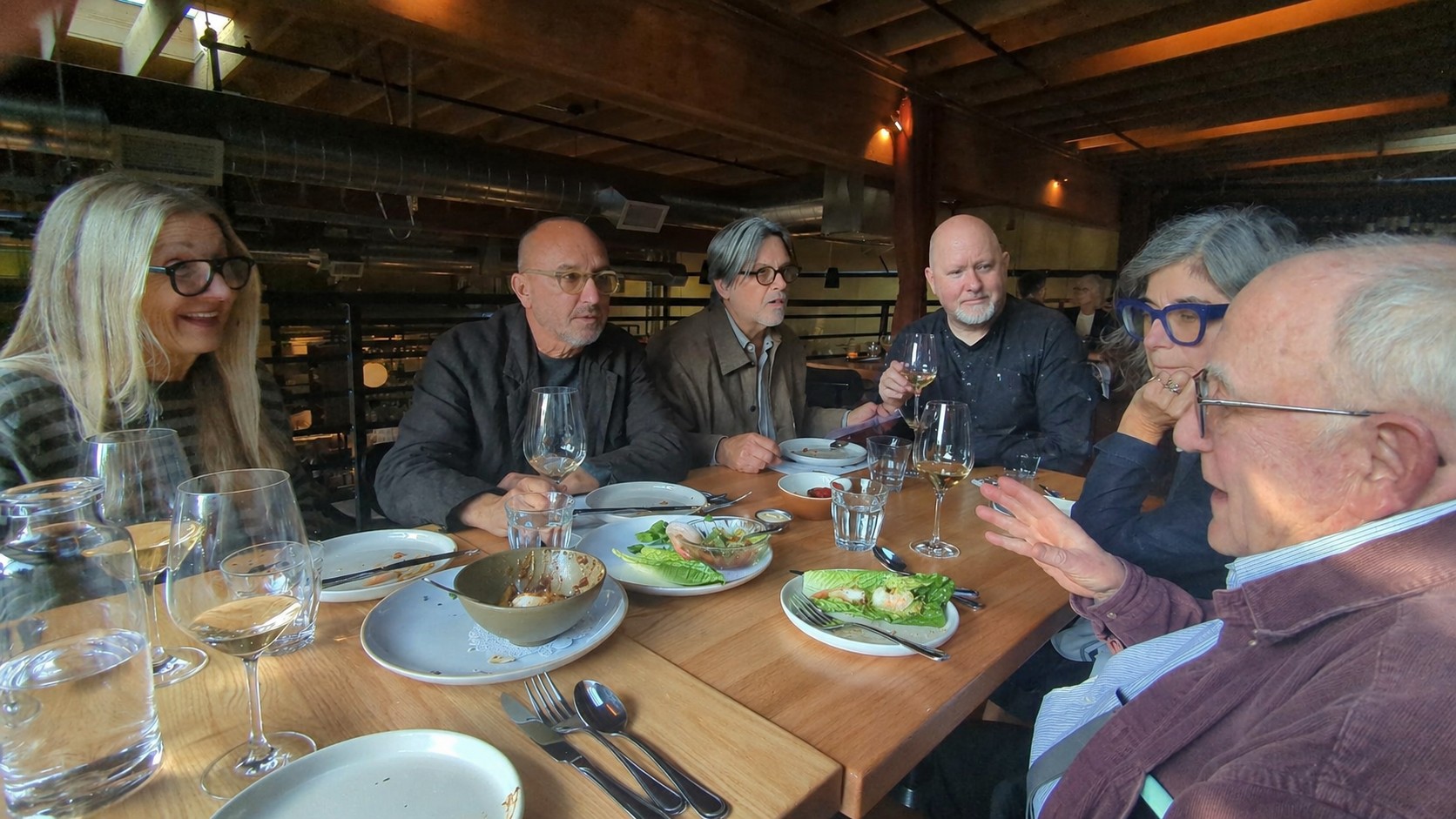
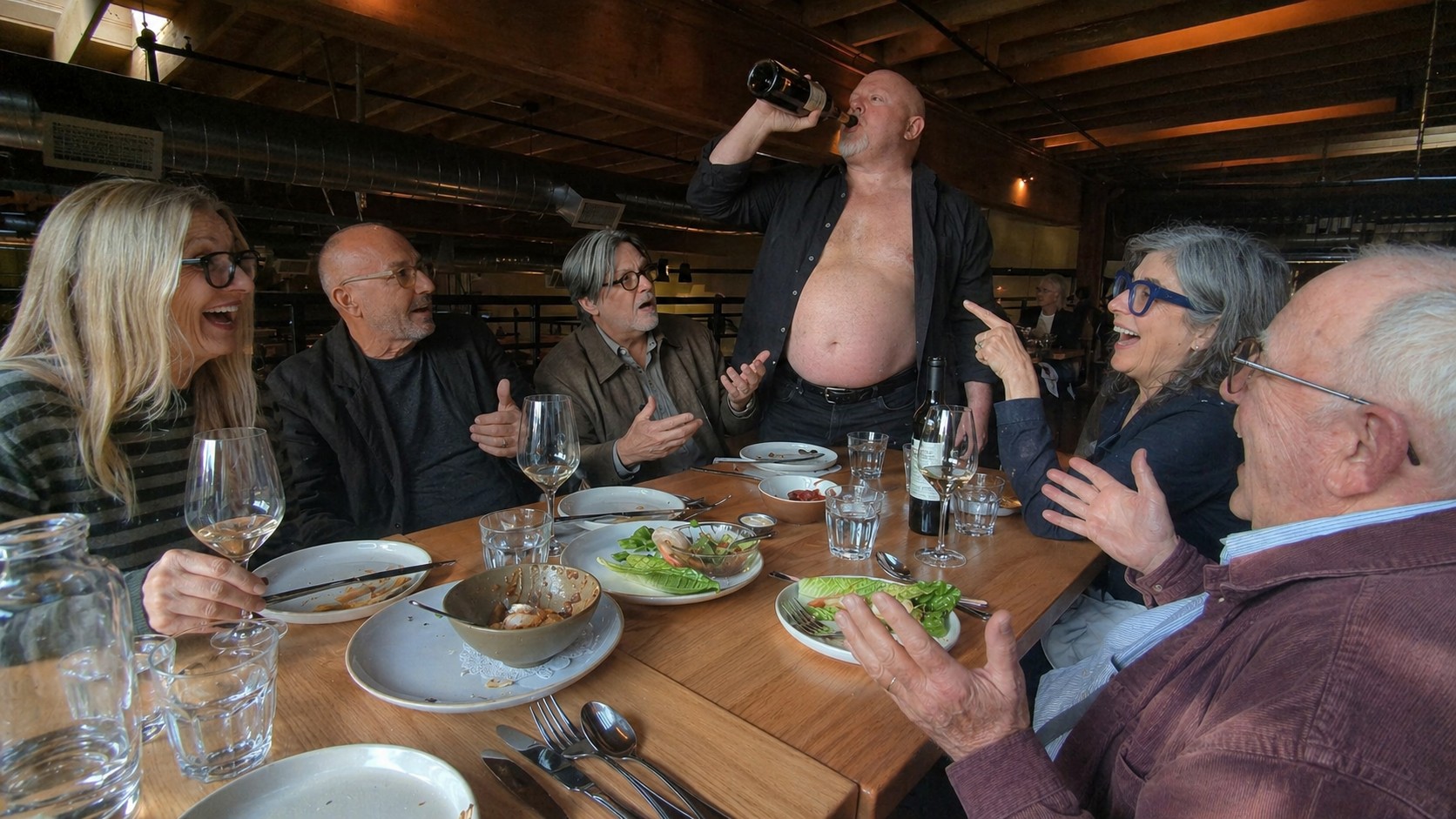
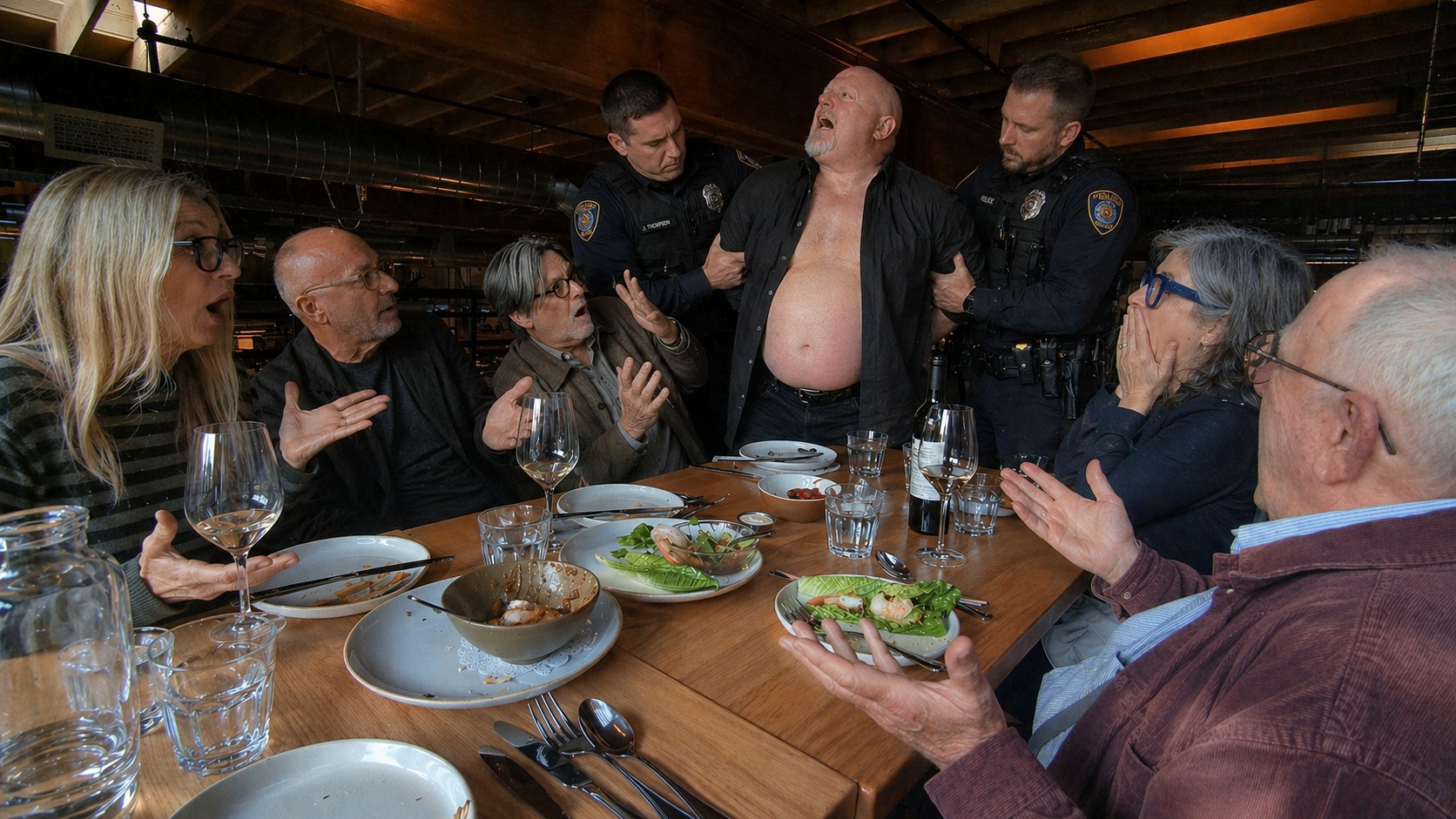
Setup, escalation, consequence. Three shots. The first needs to be ordinary enough to give the others somewhere to go. I recognize that from editing: you feel the sequence working, and explaining each shot would only get in its way.
Some attempts still fall flat. Jerry Seinfeld said on The Tim Ferriss Show, "Every opinion the audience gives you is 100 percent accurate." He was talking about the feedback a performer gets from a room. I take the point. If they didn't laugh, explaining why they should have probably isn't going to improve the evening.
So I keep trying. I don't need a stage. A coworker hiding a smile or one of my kids groaning is plenty. The kid who wanted to be Mork is apparently still in there, trying to become the class clown forty years too late.
Piglet, of course, hasn't had to practice any of this. She just went to sleep.