
Patterns
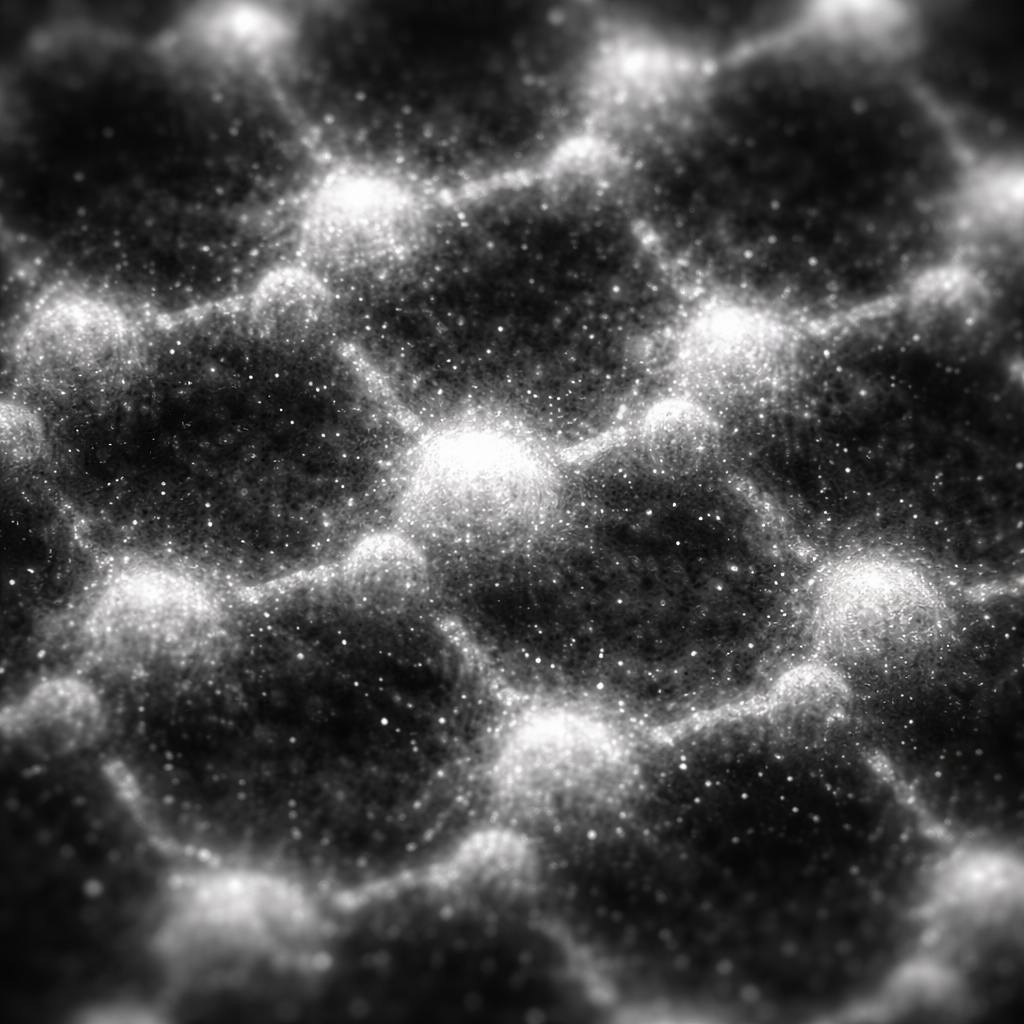
Human beings are pattern-seeking creatures. Long before we had mathematics or computers, we were already looking for structure in the world-shapes in the stars, rhythms in the seasons, meaning in the rise and fall of events. The instinct to notice patterns may be the quiet engine behind many of our deepest pursuits: religion, art, science, and now artificial intelligence.
The American philosopher and psychologist William James spent much of his work trying to understand how the human mind organizes experience. In The Principles of Psychology, he famously described thought as a flowing process rather than a series of disconnected ideas. As he wrote:
"Consciousness... does not appear to itself chopped up in bits... it flows."
This "stream of consciousness," as James called it, constantly organizes experience into relationships and similarities. The mind is always connecting things, recognizing echoes, noticing structure. In other words, it is constantly searching for patterns that help make sense of the world.
For many people, this pattern-seeking extends all the way to the beginning of the universe. Whether one calls it God, a creative principle, or simply the laws of physics, the origin of the cosmos is often imagined as the moment when order emerged from chaos. Modern physics even hints at a surprisingly poetic possibility. In string theory, the most fundamental elements of reality may not be particles at all but unimaginably small strings that vibrate. Each vibration forms a kind of wave-much like a guitar string vibrating to produce sound. Different vibrations produce different particles and forces. In that sense, the structure of the universe may arise from tiny patterns of vibration at the deepest level of reality.
Art represents another expression of the same impulse. Artists notice patterns in emotion, light, movement, and culture, then reshape them into music, paintings, stories, or architecture. Music is perhaps the clearest example. At its core, music is a series of repeating patterns-rhythms, harmonies, and melodic structures that unfold over time. These patterns are often closely tied to mathematics: ratios between notes, repeating measures, and symmetrical structures that give music its sense of balance and expectation.
Artificial intelligence, in many ways, is a technological extension of this same human instinct. Machine learning systems work by detecting statistical patterns in massive datasets-patterns in language, images, behavior, and probability. Where humans once searched for patterns with intuition and experience, AI now does so with scale and speed.
Seen from this perspective, theology, art, and artificial intelligence are not as distant from one another as they first appear. Each is a different attempt to understand and work with the patterns that shape reality. Religion asks where the patterns come from. Art explores what they mean. AI attempts to reproduce the ability to detect them.
William James also hinted at something deeper about this human tendency. In The Varieties of Religious Experience, he suggested that our everyday awareness may only be a narrow slice of a much larger reality:
"Our normal waking consciousness... is but one special type of consciousness, whilst all about it... there lie potential forms of consciousness entirely different."
Perhaps the drive behind religion, art, and artificial intelligence is rooted in that same intuition-that reality contains patterns deeper than what we immediately perceive. If so, the human search for those patterns may be less about invention and more about recognition.
We are creatures built to notice patterns. Once we see them, we cannot help but ask where they came from, what they mean, and whether we can learn to see them more clearly.