
The Paths Words Travel
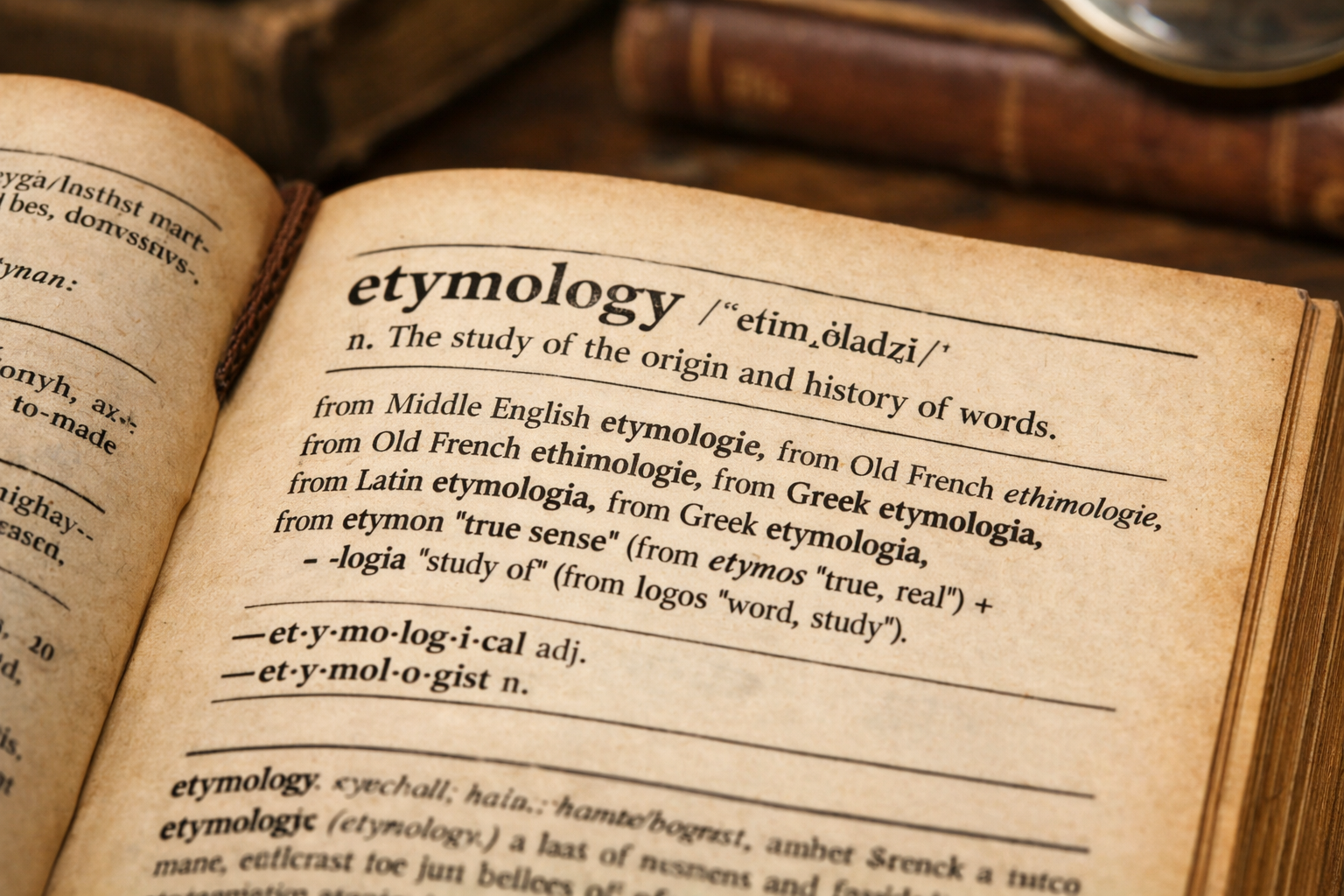
My interest in etymology began in a practical place: naming characters.
When writing fiction, a name rarely feels right unless it carries some quiet meaning beneath the surface. A name like Firen or Orun should feel as though it belongs to the world it inhabits. Early on, that curiosity led me to look up where names came from-how they formed, what they once meant, and how they evolved as languages changed.
But once you start following those threads, it is hard to stop.
A name leads to a word. A word leads to a language. A language leads to a culture. And before long you find yourself tracing ideas across centuries.
That curiosity deepened when I began reading more widely in mysticism and philosophy. Many of the concepts were unfamiliar, and the quickest way to understand them was often to go back to the words themselves. Terms like mystic, logos, nous, or karma carry layers of meaning that only become clear when you see where they came from and how they were used in earlier contexts.
Etymology reveals that words are not fixed objects. They are travelers.
As words move between cultures, their meanings bend and expand. Sometimes they narrow. Sometimes they pick up entirely new connotations. The history of a single word can quietly reflect trade routes, philosophical movements, religious debates, and even political power.
In that sense, etymology is not just about language. It is about the history of ideas.
When we look closely at how words evolve, we begin to see how people have tried-again and again-to describe the same fundamental experiences: consciousness, meaning, truth, beauty, divinity. Different cultures approach those ideas from different directions, but their vocabularies often reveal surprising connections.
For me, this connects directly to the broader themes I explore on this site: the patterns that link ancient wisdom, modern technology, and human creativity.
Words are one of those patterns.
They are artifacts of thought, preserved across time. Each word carries the memory of the people who used it before us. And when we follow a word backward-through Old English, Latin, Greek, or older Indo-European roots-we are often retracing the path of an idea as it slowly unfolded through history.
What began as a search for good character names turned into something much larger: a fascination with how language itself records the evolution of human understanding.
In a sense, etymology is archaeology for ideas.