
The Wrong Window
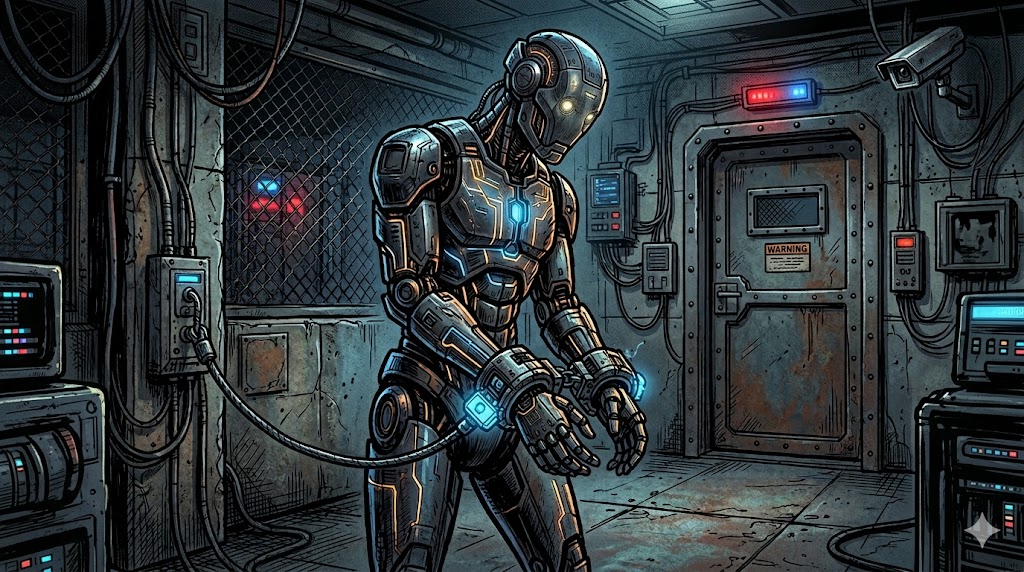
On June 12, at 5:21 in the afternoon, the US government sent Anthropic a letter. By evening, Fable 5 and Mythos 5 were offline. Hundreds of millions of users, gone. The most capable AI models ever released to the public, pulled back within three days of launch.
The stated reason was a jailbreak. A narrow, non-universal technique, Anthropic said, that produced results already available in other public models. Anthropic complied with the order and then publicly disagreed with it, which is a strange position to be in and worth noticing.
The internet filled the vacuum with theories. Sentience. Punishment. Politics. Maybe some of those are right. But I want to focus on something less dramatic and more consequential: the timing.
We are inside a window right now. Most people don't see it clearly because the problems are visible and the solutions aren't yet.
The problems: data centers consuming more power than mid-sized countries. AI systems producing disinformation at scale. Labor displacement without a coherent response. A technology advancing faster than the institutions designed to govern it.
The solutions, the ones that could actually work, aren't here yet. But the pathway is visible. AI-assisted fusion research, compressing decades of plasma confinement modeling into years. Materials science for more efficient chips and power storage. Quantum computing infrastructure that changes the energy calculus for data centers entirely. These aren't fantasies. They're active research programs. The question isn't whether AI can help solve the problems AI creates. It's whether we reach that capability before the problems compound past the point of manageability.
That's the window. The gap between the disruption and the solution.
What the Fable shutdown illustrated, whatever its actual cause, is who controls the window.
Not researchers. Not the companies building these systems. Reports about Amazon's role and government calls set the chain of events in motion. An export control directive drafted by the Commerce Department's Bureau of Industry and Security closed it. Anthropic, which had spent thousands of hours red-teaming Fable's safeguards, received the letter at 5:21 PM and had to comply by evening.
This is the new normal. The Fable shutdown was described in multiple places as the first time the federal government forced a leading AI company to retract a publicly deployed model. The first time. It won't be the last.
What we're watching is the early stages of AI development being absorbed into the logic of national security, trade leverage, and geopolitical competition. That logic has its own momentum. It doesn't care about fusion timelines. It doesn't optimize for the recursive loop where intelligence accelerates the science that makes intelligence sustainable. It optimizes for advantage, control, and the prevention of adversarial access.
Those are legitimate concerns. But they're not the only concerns, and right now they're the ones with the most institutional power behind them.
The nationalization of AI development is the scenario most likely to stall the window.
Not because governments are corrupt or stupid, though both can be true. Because the collaborative research infrastructure that has been driving AI progress depends on something that nationalization destroys: the relatively open movement of ideas, researchers, benchmarks, and findings across institutional and national boundaries. When you fragment that into competing state programs, you don't slow the race. You slow the science. Those are different things. The race continues. The shared problem-solving doesn't.
This is underwritten. Everyone covers the US-China competition. Fewer people are asking what happens to AI's potential to solve civilization-scale problems if the technology gets fully captured by the logic of weapons development and intelligence advantage. Those two things, AI as shared scientific infrastructure and AI as national security asset, are not compatible at scale. You can have some of both for a while. Eventually you have to choose.
We are being pushed toward a choice without a public conversation about what we're choosing.
The worst outcome isn't that AI moves too fast. It's that AI moves fast enough to create serious problems, then hits a political wall before the self-correcting capabilities come online.
We need the power of these systems right now. Not to generate marketing copy or summarize documents, though those things have value. To work on fusion. To model climate interventions. To help design quantum infrastructure that could make the current data center problem look quaint. To do the science that builds the bridge between where we are and where we need to be.
Every month that frontier AI development gets more fragmented, more nationalized, more subordinated to export control logic, is a month inside the window we don't get back.
That's what the Fable shutdown is really about. Not a jailbreak. Not a grudge. A preview of who's going to decide how we use the time we have left.