
Turner and Hilma af Klint: Painting the Invisible
J. M. W. Turner and Hilma af Klint lived in different centuries and painted in radically different styles, yet both seem to have been reaching toward something beyond ordinary representation. Turner pushed landscapes to the edge of dissolution-storms, sunlight, and mist swallowing ships and cities until only color and energy remained. Af Klint moved in the opposite direction: away from the visible world entirely, filling canvases with spirals, geometry, and symbols meant to represent unseen forces.
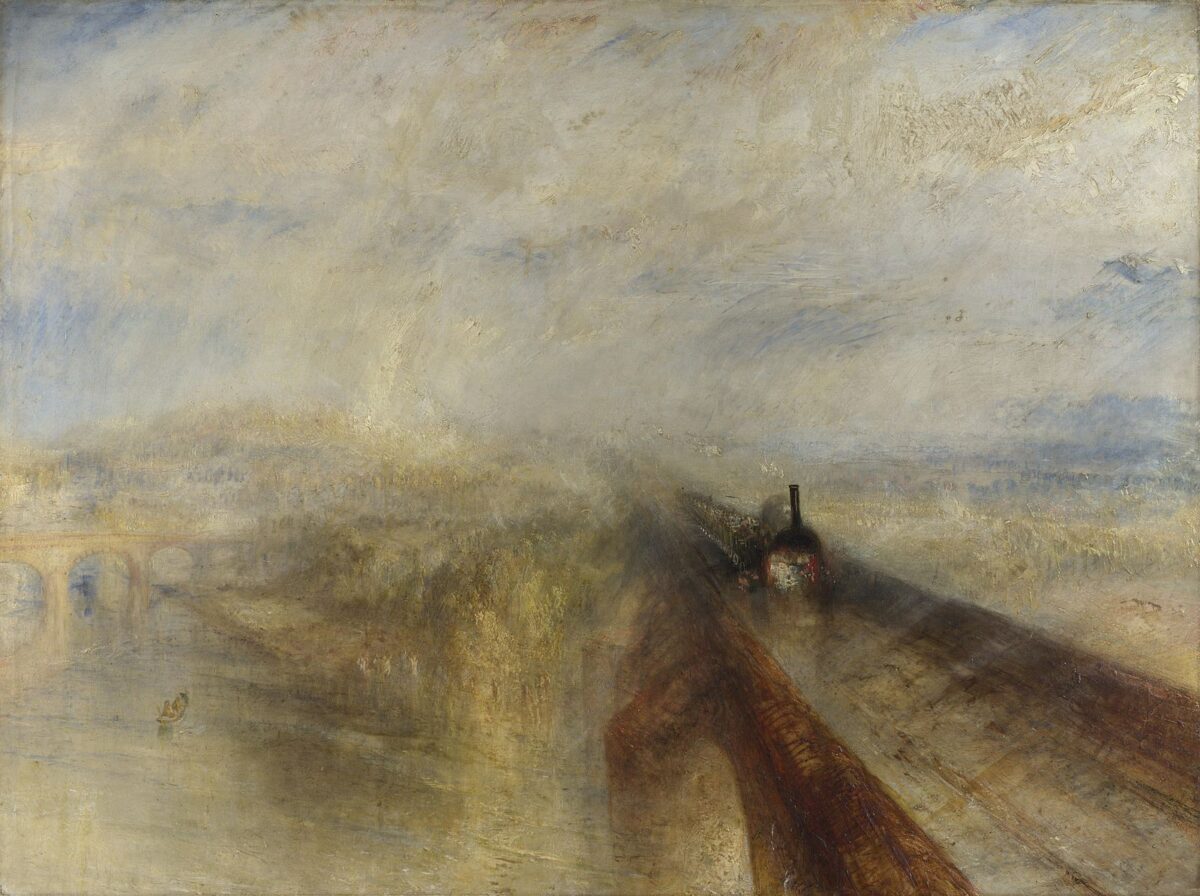
Turner rarely framed his work in spiritual language, but his paintings often feel almost metaphysical. In works like Rain, Steam and Speed or his late seascapes, the physical world seems to melt into light. Land, sea, and sky collapse into the same glowing field. The result feels less like a depiction of nature and more like an encounter with its underlying energy-something closer to experience than to documentation, evoking sensation and force rather than representing stable objects with fixed boundaries.
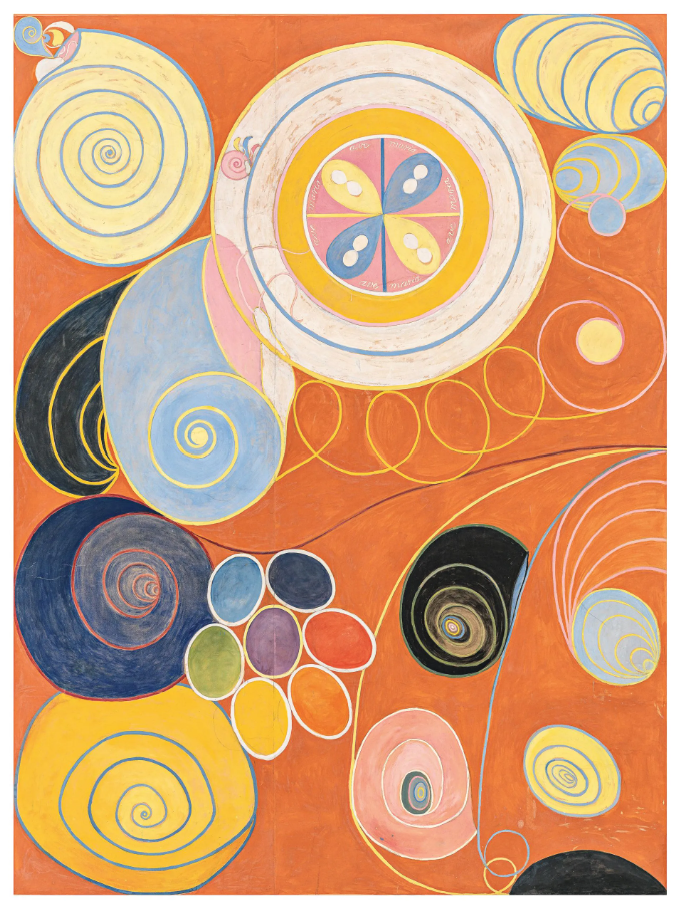
Af Klint was explicit about the spiritual dimension. A deeply mystical thinker, she participated in spiritualist circles and believed that many of her paintings were guided by higher intelligences. Beginning in 1906, she produced a massive body of abstract work she called Paintings for the Temple-a future contemplative sanctuary of spiritual understanding and profound inner transformation. This places her among the very earliest artists to work consistently in pure abstraction, years before abstraction was canonized through figures like Kandinsky, Mondrian, or Malevich. To her, these were not experiments in style but diagrams of a deeper reality-maps of spiritual evolution, duality, and cosmic order. Seen this way, her abstractions were not departures from meaning; they were attempts to make invisible structures legible.
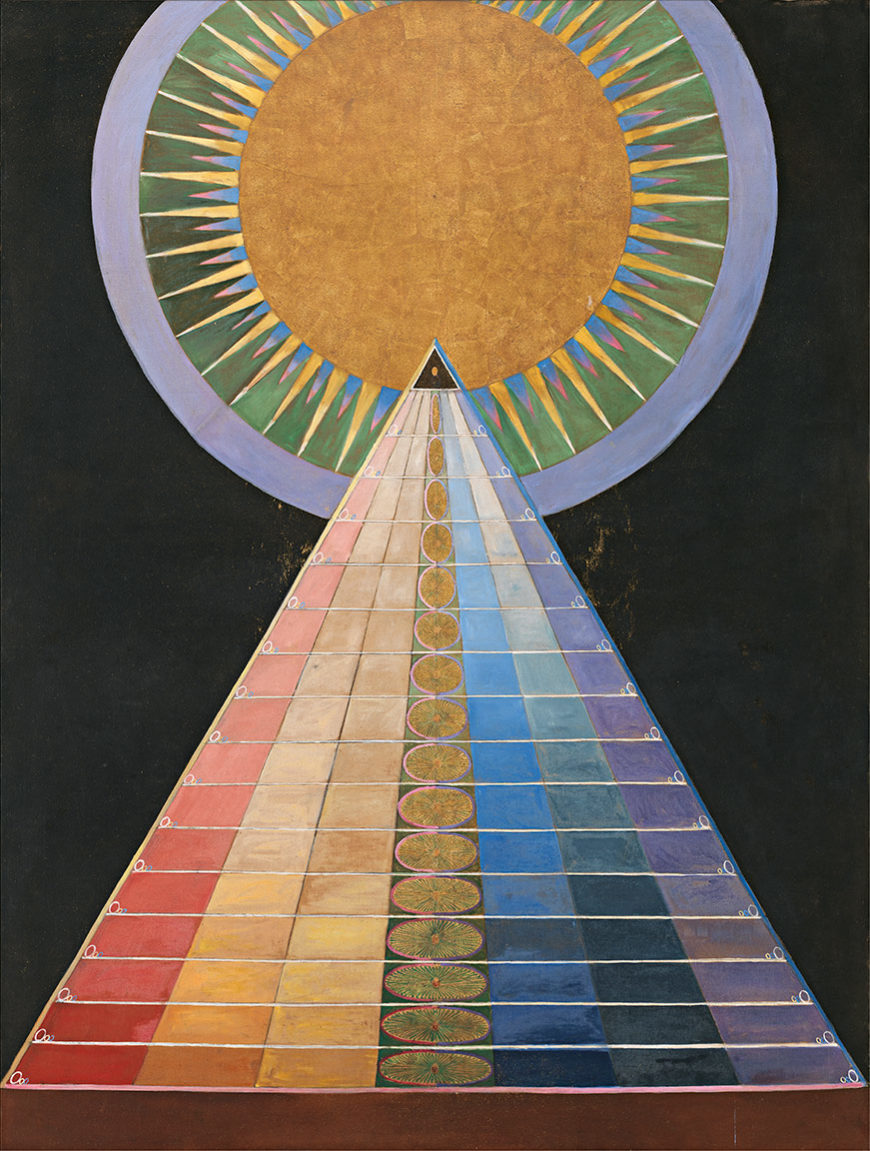
What is striking is that af Klint believed the world was not ready to understand them. She requested that the paintings not be widely shown until decades after her death. In her view, they were messages intended for a future audience that might finally have the conceptual language to grasp them.
Seen together, Turner and af Klint illustrate two very different ways art can approach the invisible. Turner dissolves the world until light itself becomes the subject. Af Klint begins where the visible world ends and constructs an entirely symbolic one. Both, in their own way, suggest that art is not just about representing reality-it is about probing the patterns that lie underneath it.