
Four Rooms
The fear did not leave. It just stopped running the show.
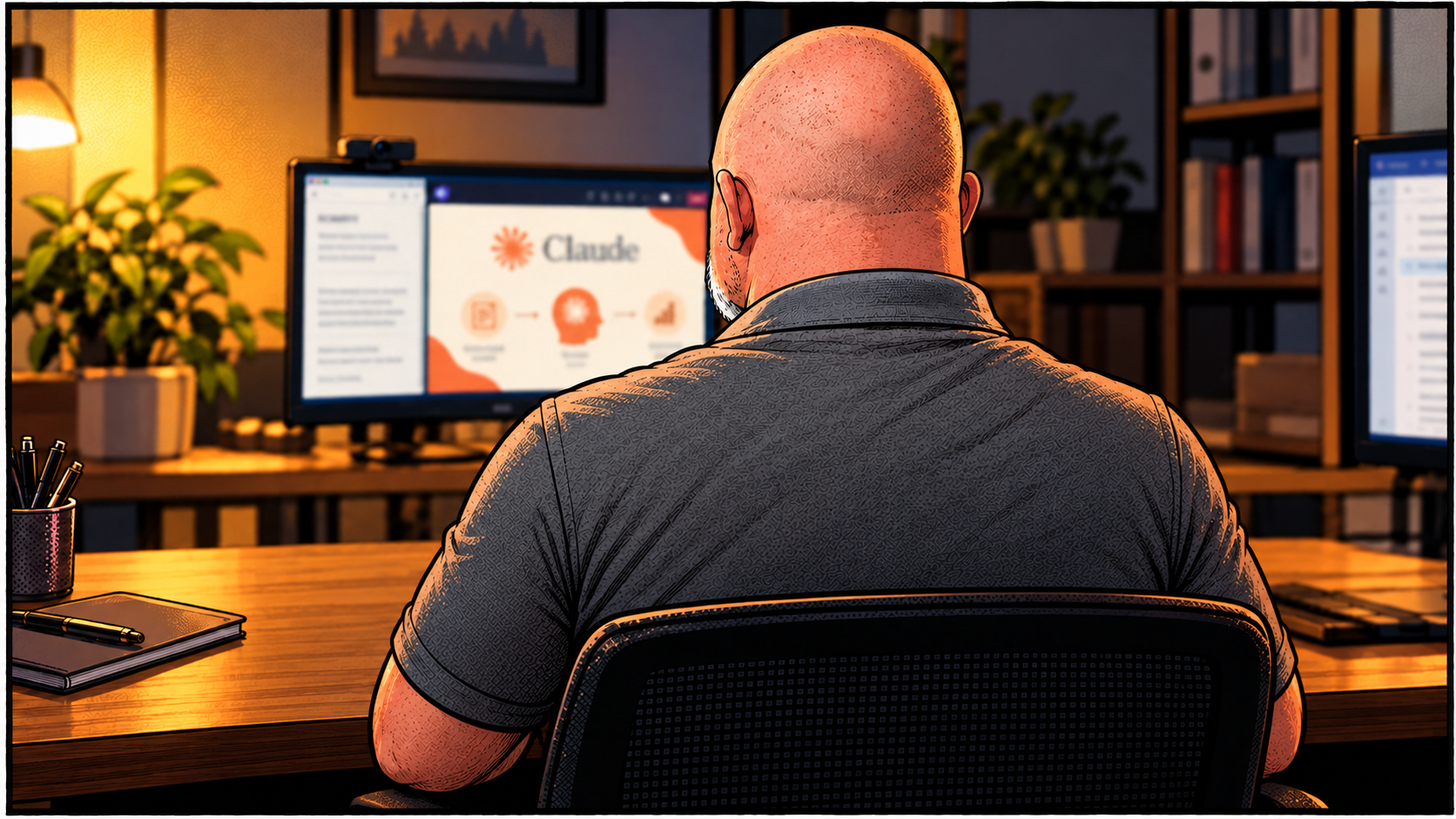
In March, a higher-up asked me to give a presentation on CoCounsel. I use it nearly every day, and I had taught plenty of people to use AI tools one-on-one, sitting beside them at the pace of a conversation. But this would be over Teams, to nearly the whole office, easily more than 150 people. And I have major stage fright.
I freaked out.
She told me I would do well. She told me I knew what I was talking about.
It is strange how much weight someone else’s confidence can carry when you cannot find your own. I did know the material. What I could not do was feel that I knew it, not with that many people on the other side of the screen. Her words gave me something to stand on until I could find my own footing.
On March 19 I logged on and started talking. Somewhere in the middle I got lost, and I struggled to find my way back. People noticed I seemed nervous. But nobody seemed to think it had gone badly, and that gap stayed with me. I have written before about not trusting the instrument that measures my own performance. Here was that same instrument, reading a disaster where other people saw a nervous man who knew his subject.
In June came a smaller meeting, about fifteen people, again on Teams. Smaller did not mean easier, because of who they were. I knew most of them by name and reputation and had barely spoken to any of them. Many were attorneys, the kind of powerful players whose names carry weight across a firm. A screen full of people I do not know has always been my Achilles heel, and these were people I did not know who also mattered. I walked straight into the hardest version of the thing I was afraid of, and I got through it.
In September came the attorney retreat, live, in a real room with real faces looking back at me. I was one of two paralegals there. We had been invited, but it still felt a little like crashing someone else’s party. When it was my turn to speak, I found a face in the crowd, someone I did not know, and rested my eyes on them, unfocused, while I talked. It was not elegant. But it gave the fear somewhere to go while the rest of me did the work.
I have almost forty years of contemplative practice behind me, and none of it made the fear go away. I wrote in Sticks and Stones that practice is not a shield, and this is the same lesson in a different room. The fear still arrives on schedule. What practice may give me is the ability to let it be there and keep going anyway, to notice the racing without becoming it.
This Tuesday I presented again, at a department meeting on Teams. These were mostly people I knew of, and some I work with every day. You might think familiarity would help. It never has. Strangers or colleagues, the fear shows up the same.
What was different this time was me. After three rooms, I knew enough to know how to prepare.
I wrote a script and followed it, mostly. I added uhs and ums so it would not sound read. And the medium, which had always been the hard part, finally worked in my favor: on Teams, the camera cannot see the page. A couple of people were surprised afterward when I told them I had been reading.
In Zen and the Art of Getting Out of Your Own Way, I wrote that when I work with Claude, I leave the beginning loose and put the care at the end. This was the reverse. All the care went in up front, so the delivery could breathe.
I do not think those two ideas contradict each other. Both are about putting structure where it does the most good. When fear is in the room, there is no spare attention left for improvising, so the thinking has to happen before you walk in. Once it is done, the moment itself can be looser than it feels.
Looking back, the audiences got more familiar as the year went on: the whole office, then powerful strangers, then a room of attorneys, then my own department. But familiarity was never the thing that changed. Preparation was.
Four rooms in seven months. It is getting easier, not because the fear has left, but because each room taught me something the next one could use. The first showed me it felt worse than it looked. The second showed me I could walk into the hardest version. The third showed me I could find my own way through in real time. The fourth showed me how to prepare.
Surviving it, coping with it, designing for it.
And it started with someone telling me I knew what I was talking about, before I believed it myself. Sometimes growth begins with borrowed confidence. You carry it until you have enough of your own.