
The Access Gap
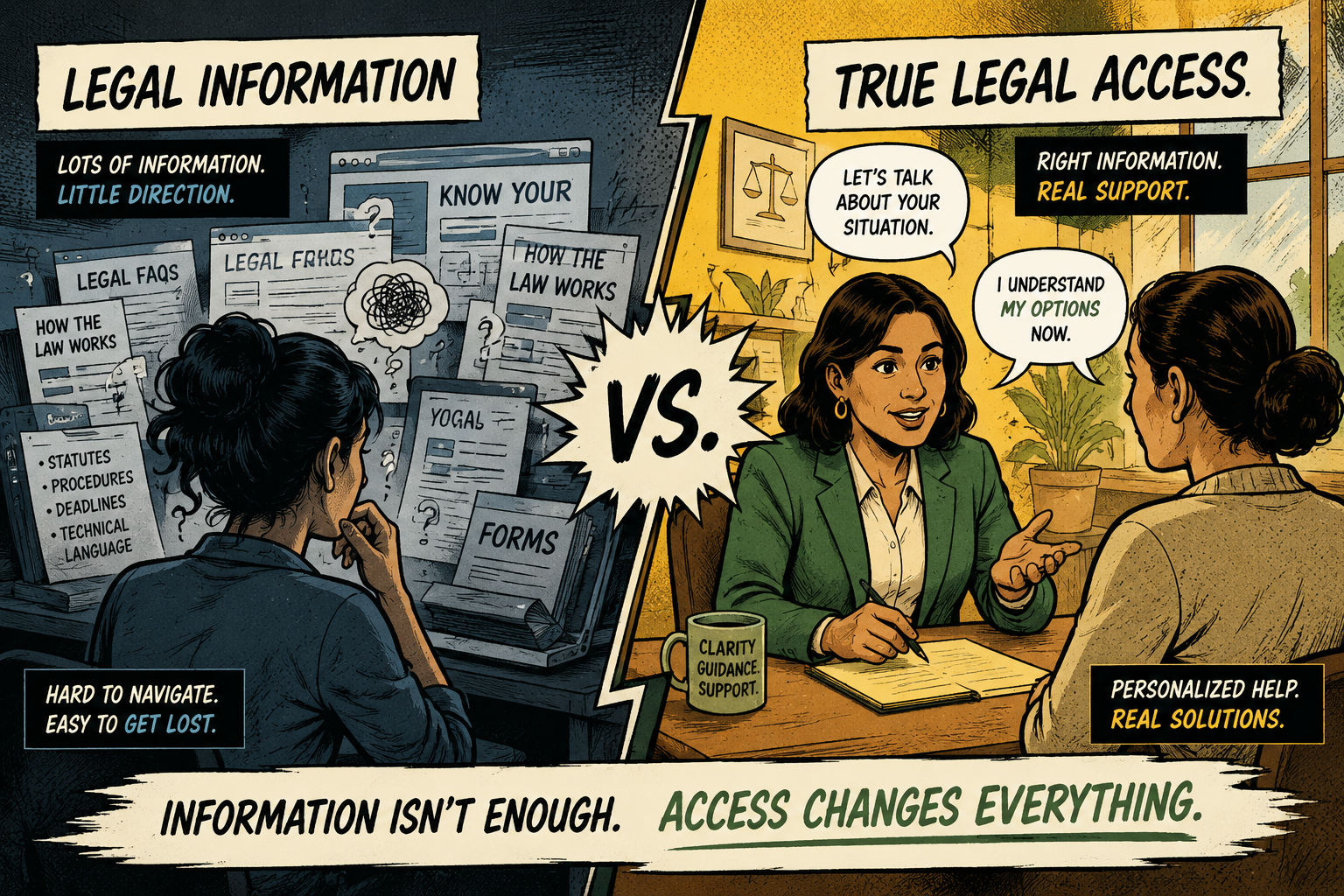
There is a slide making the rounds from an Anthropic presentation. It is titled "Democratizing legal access." It lists four partner organizations. It carries a quote from the CEO of Courtroom5, which serves the eighty percent of civil litigants who appear without an attorney: "Most people don't know they have legal rights until it's too late to use them. Claude can now meet them where they are, in the moment they're scared and searching for answers."
That is a real problem. The access-to-justice gap in America is not a minor inefficiency. It is a structural failure that falls hardest on people who cannot afford to find out what their options are. If Claude can help someone understand, in plain language, that they have tenant rights before the eviction notice lands, that is not nothing.
But I have spent enough time with these tools to know what they are and what they are not.
What they are: very good at producing legally accurate, well-organized information. What they are not: a substitute for the judgment that determines which of those accurate facts matters, in what order, for this specific person in this specific moment. I wrote about this gap a while back, calling it the judgment ceiling. It does not shrink because the information became free. It becomes more visible.
The Courtroom5 model makes this concrete. The site offers guidance for pro se litigants in civil cases. That is useful. Walking someone through what a discovery request looks like, or how to read a court docket, or what "motion in limine" means, reduces confusion and may reduce the dignity cost of appearing unrepresented. But the civil litigant sitting across from an attorney in a housing court does not have an information problem at that moment. They have a representation problem. The attorney knows which local judge responds to which arguments, which facts are dispositive in this jurisdiction, and how to read the opposing counsel's strategy from the way they filed. Claude does not know those things, and cannot.
Descrybe offers primary law research, citation verification, concept search. This is genuinely powerful for people who know how to use research. But knowing how to use legal research is itself a skill that takes years to develop. The problem with pro se litigants is rarely that they cannot find cases. It is that they do not yet know which question they are trying to answer.
Free Law Project aggregates court opinions, PACER dockets, citation data. Essential infrastructure. Also not legal advice.
Justice Technology Association describes itself as supporting the justice-tech ecosystem. This is a trade organization for companies trying to sell to legal aid organizations. Not a criticism, but worth naming clearly.
None of this is cynical marketing. These are real tools, doing real work, and the Claude for Nonprofits pricing program is a tangible commitment. But "democratizing legal access" is a large claim for what is, accurately described, democratizing legal information. The distinction matters. Not because information is useless, but because the gap between information and outcome, in legal contexts, tends to be where the system is most rigged against the person who needs the help.
The Sonja Ebron quote is the honest version of the pitch. Meeting people in the moment they are scared and searching is valuable. It may be the most valuable thing this can do. That is not democratization. It is triage. Triage is important. We should be clear about which one we are doing.