
The Last Cut
I was watching a short of Jimmy Carr recently where someone asked him whether AI could do his job. He said no, very quickly. Then he explained why: comedy is a right-brain job, and AI is a left-brain machine. It's a comforting answer, and it's wrong in an interesting way.
The left-brain/right-brain split is mostly pop psychology. Some functions lean to one hemisphere, but nobody runs on half a brain, and creativity draws on both. A large study found that language and other functions can be lateralized, but that people do not fall into globally left-brained or right-brained types; a review of creative cognition describes creative thought as coordination between large-scale brain systems.
The irony runs deeper. Language, the raw material of a one-liner, is handled mostly in the left hemisphere for many people. And language is exactly what large language models do best. If any comedy is vulnerable, it's the tight, engineered one-liner that made Carr famous.
Still, I think Carr is right that he's safe, at least for now. He just drew the line in the wrong place. The real divide isn't logic versus creativity. It's generation versus judgment.
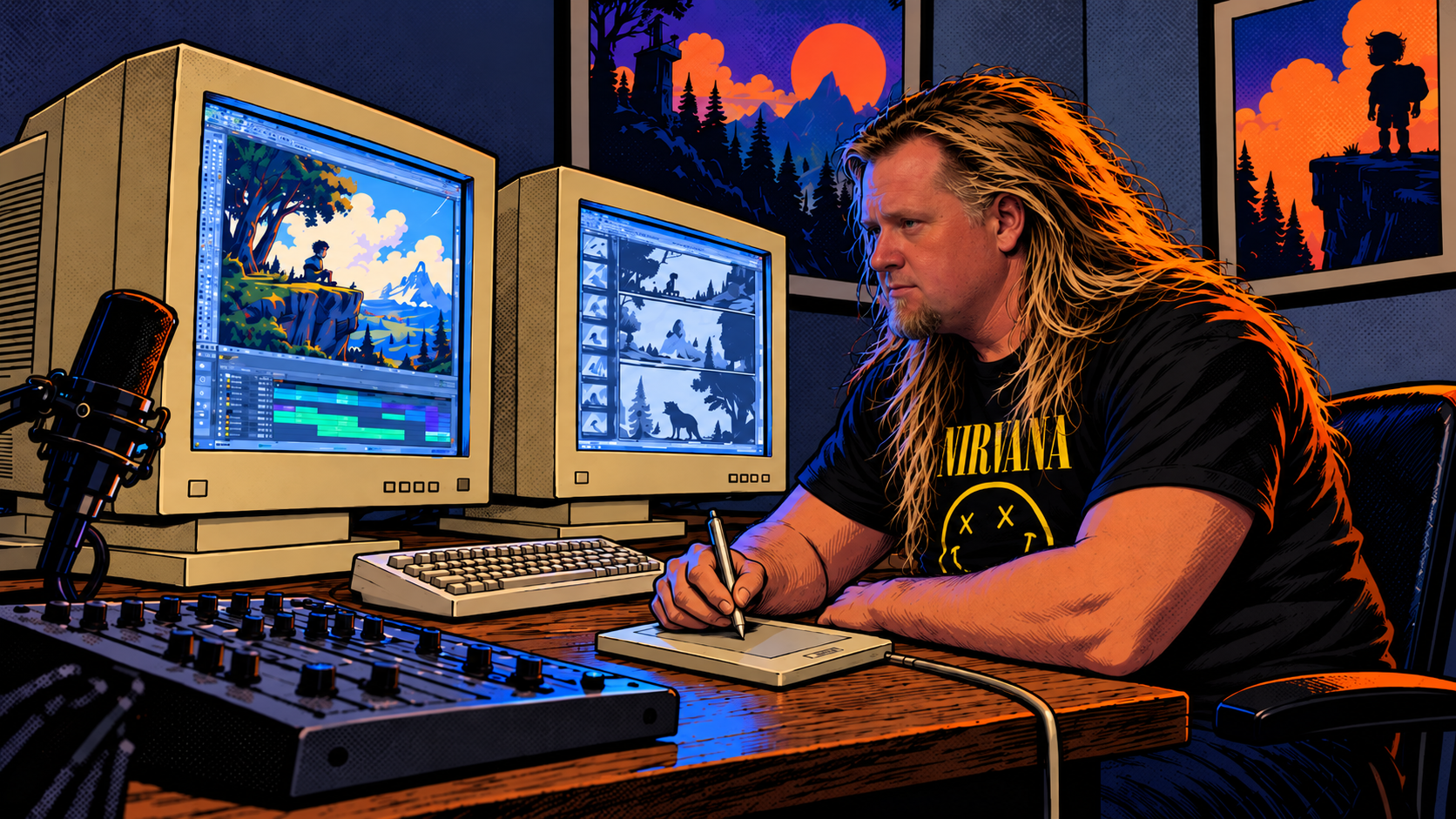
I learned that divide long before AI. Before I was a paralegal, I was a film editor, and editing teaches you something most people never see from the theater seat: the footage is not the film. A shoot produces hours of material. The film is the few minutes you keep.
Every cut is a judgment. Is this take truer than that one? Does the scene need the pause, or does the pause kill it? Is the joke funnier if we cut away a beat early? None of those answers are in the footage. They're in the person in the edit bay.
AI is a tireless footage generator. Ask for ten jokes, ten openings, ten images, and you get them in seconds. Ask for a hundred and you get those too. Abundance doesn't make the editor obsolete. It makes the editor the whole job.
So what is judgment, exactly? It's knowing what matters. It's sensing that a line is true to the moment, or that something works even when you can't say why. It's choosing the one take out of forty, and being willing to be wrong about it.
AI can mimic the outputs of judgment. It can rank, score, and explain why one option beats another. What it lacks is the ground judgment grows from: stakes, a body in a room, a life that has been embarrassed and moved and bored. A comedian knows a joke works because he has felt a room go silent. An editor knows a cut works because the gut says so before the mind can explain it.
I see the same ceiling in my legal work. AI can draft a filing that looks right and still miss what the case actually turns on. The words are fine. The judgment is absent. Comedy, editing, law: the pattern holds. I wrote about that gap between legal language and legal judgment in Legal Slop.
If the story ended there, it would be a comforting one. Humans judge, machines generate, everyone keeps their job. But judgment isn't a fixed human endowment. It's built, slowly, by making things.
I learned to cut by cutting: making bad edits and living with them until I could feel why they were bad. Comedians build their judgment at open mics, bombing for years. Every craft works this way. Taste comes from a long apprenticeship to your own failures.
So what happens when generation becomes free? If a student never writes the bad essay, never builds the clumsy joke, never makes the ugly cut, where does their judgment come from? We may raise people who can choose from a thousand options but never developed the sense to choose well. It's The Ease Trap again. The friction we're engineering away may be the very thing that produces the faculty we're counting on to keep us relevant.
Which brings me back to Jimmy Carr. He's safe, but not for the reason he gives. People pay to watch Jimmy Carr choose. His jokes are selections, sharpened over decades in front of live rooms. That isn't a right-brain gift. It's earned judgment.
AI will generate more of everything: more jokes, more images, more drafts, more footage. The scarce thing will be the person who knows what to keep. The question isn't whether machines can make. It's whether we'll keep doing the making that teaches us how to choose.
The last cut is still ours. But only if we remember how to make it.