
What We're Taught and What We Already Know
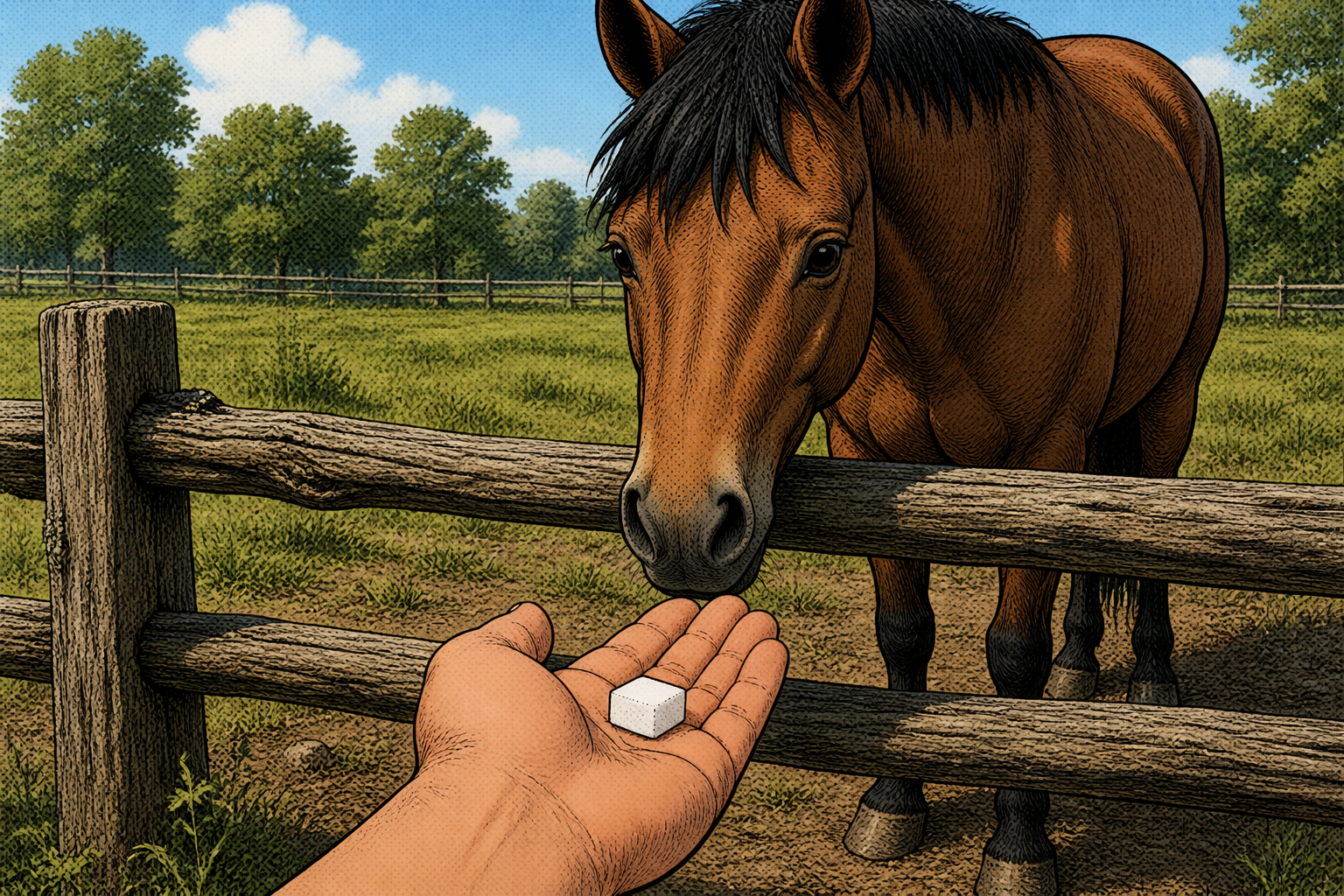
I once gave sugar cubes to a young horse on a ranch outside Bend, Oregon. I was thirteen, on vacation with my family, and I had never fed a horse before. When I held out the first cube my hand was unsteady, not sure what to expect. The horse pulled back, nostrils wide, ears uncertain. It was hesitant too. There was nothing mean in it, just two beings meeting each other across an unfamiliar moment, neither one with a framework for what came next. I waited. It leaned in slowly, lips searching, and then it took the cube off my palm.
What happened next was unmistakable. The horse went still for just a moment, the way something does when it's paying attention to itself. Then it pushed its nose toward my hand looking for more.
Nobody told that horse sugar was good. No study confirmed it. The knowledge arrived the only way that kind of knowledge can. Through direct contact, before language, before culture, before any borrowed chain of authority had a chance to weigh in.
That moment stayed with me. Because it points at something we mostly talk around.
I grew up being told sugar was a treat. Then I was told it was bad for me. Then the science got more specific, bad for some people, fine for others, depending on conditions nobody knew to check for when I was a kid. The sugar cube I gave that horse has been revised several times over since then, at least in terms of what we're supposed to think about it.
That's how borrowed knowledge works. It arrives with authority. It gets updated. Sometimes it reverses entirely. You trust the chain because you have to, because you can't personally verify every link in it. Most of what we call knowledge operates this way. Bertrand Russell's old philosophical distinction between knowledge by acquaintance and knowledge by description is useful here, even if the ranch did not feel like philosophy at the time.
But here is the thing about that horse. It was not wrong.
When sugar hit its tongue, something real happened. In the wild, sweet things mean energy. They mean survival. The horse's body knew that. It was not a trick, not a mistake. It was the animal reading the world correctly. Studies of equine taste response have their own careful language for this, from horses' reactions to sucrose and bitter compounds to broader work on horse taste preferences, but the body knew before the paper did.
Now think about someone who is genuinely starving. Not skipping lunch. Actually starving. If you hand that person a piece of fruit, something sweet and simple with sugar at its core, in that moment it is not bad for them. It is exactly what they need. The doctors would agree.
So what changed? Not the sugar. Not the body's response to it. What changed was the context. Abundance changed it. Sedentary lives changed it. Metabolic conditions we mostly created ourselves changed it. The neuroscience of sweet taste still ties sweetness to the body's ability to identify and remember energy sources. The problem is not that the signal is false. The problem is that the environment has changed around the signal.
The signal was always accurate. We just moved into circumstances the signal was never designed for. I later watched a smaller, shakier version of the same truth in Sukoshi, whose fear response was not wrong even when his desire was just as real.
I have been sitting with this kind of question for a long time. More than forty years of contemplative practice, which sounds impressive until you realize that most of it has been learning to get out of my own way. Not acquiring knowledge. Shedding the borrowed kind.
What the various traditions point at, and I will get to those in a moment, is not some distant mystical achievement. It is closer to what that horse did. Direct contact. Before the interpretation arrives. Before the cultural overlay settles in and starts telling you what you just experienced.
Most of us live almost entirely in the overlay. We experience something and immediately reach for the borrowed framework to explain it. What was that. What does it mean. What does the science say. What would my tradition call it.
The contemplative invitation is simple, though not easy. What if you stayed with the thing itself for just a moment before reaching for the explanation.
Most of the world's contemplative traditions have a name for this distinction. The Sufis separate discursive knowledge from direct recognition, the difference between ilm and marifa. Hindu philosophy calls unmediated direct perception pratyaksha, the thing known before the mind processes it into concept. Zen mostly refuses to name it at all, which is itself the point; its old formulations speak of pointing directly into the human mind, outside the ordinary dependence on words and letters. Different languages, different centuries, different cultures. The same finger pointing at the same thing.
If you want to follow any of those threads further, they are worth following. But you do not need the vocabulary to recognize what they are describing. You already know what it felt like when that horse went still.
I am not going to tell you that forty years of practice has given me some special access to direct knowing. Some days it has. Some days I am as buried in borrowed knowledge as anyone else, checking the framework, reaching for the explanation, trusting the chain.
But I know the difference now. Not as a concept. As a felt sense. The way you know you are thirsty before you reach for a word to describe it. The way that horse knew the difference between caution and recognition in the span of a single moment. Nobody coached it through that. The knowing arrived on its own.
The borrowed knowledge is not the enemy. You need it. I need it. We could not function without it. It tells us which foods to avoid, which bridges to trust, which medicines to take. It is genuinely useful. But it is always dependent on something outside yourself. On a study, a teacher, a tradition, a chain of people who told other people who told you.
Direct contact is different. It does not need the chain because it is not a conclusion. It is the thing itself, arriving before the conclusion is possible.

That same night on the ranch, after the horses were put away, I climbed up on a split rail fence and sat alone under the Milky Way. I was just thirteen. I did not have a contemplative practice. I did not have a tradition or a teacher or a vocabulary for what happened next. Something arrived. I could not have told you then what it was, and I am not sure I need to tell you now. But I recognized it. The same way that horse recognized something true in a single unguarded moment.
Most of what we call spiritual seeking is just the long way back to that. Not to a belief. Not to a better framework. Back to direct contact.